

If you have noticed movement when you bite or brush, you may be wondering what is causing it and how to fix loose teeth from gum disease. It can be unsettling when teeth that once felt firm start to feel less stable.
In many cases, loose teeth are linked to gum disease, also known as periodontal disease. The good news is that early detection and appropriate care can often stabilise teeth and protect your long-term oral health. With timely intervention and a clear treatment approach, many patients are able to improve stability and reduce further damage. Acting early matters because your chances of recovery improve when care begins without delay.
Why Gum Disease Causes Loose Teeth
Gum disease starts with a build-up of dental plaque along the gum line. Plaque contains bacteria that irritate the gum tissue, leading to gum inflammation, swollen gums, and bleeding gums.
In the early stages, known as gingivitis, the damage is limited to the soft tissues. However, if left untreated, the infection spreads deeper. This can develop into advanced periodontitis, where the bacteria begin damaging the underlying bone that supports the teeth.
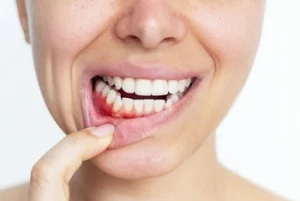 When bone-supporting structures are reduced through bone loss, teeth become loose. The tooth roots no longer have the same firm support, and teeth become loose gradually over time.
Other common signs of gum disease include:
- Receding gums.
- Chronic bad breath.
- Tender gums.
- Changes in how your teeth fit together.
If you notice any of these, it is important to seek treatment promptly.
Early Stages: Can Loose Teeth Be Stabilised?
When gum disease is caught early, loose teeth may become stable again.
In the early stages, the goal is disease control. A professional deep cleaning, known as scaling and root planing, clears plaque and bacteria from beneath the gum line. This treatment smooths the root surfaces and helps the gums reattach to the teeth.
Root planing and scaling reduce inflammation and give the gum tissue a chance to heal. With good oral hygiene at home, this can stop gum disease from progressing.
If teeth become loose due to mild inflammation rather than severe bone loss, stabilisation is possible once the infection is controlled.
Early detection truly matters. Your chances of saving natural teeth are better when care begins before significant bone is lost.
What Happens In Advanced Periodontal Disease?
When gum disease reaches an advanced stage, treatment becomes more complex. Significant loss of bone and lost tissue may require additional procedures beyond scaling.
At this stage, a structured periodontal treatment plan may include:
- Pocket reduction surgery
- Guided tissue regeneration
- Bone grafting
- Gum grafting
- Soft tissue grafts
These procedures aim to restore some of the supporting structures around the teeth.
Bone Grafting
When bone has been destroyed by infection, bone grafting can help rebuild areas of lost bone. Special materials encourage new bone formation around the tooth roots. This improves stability and supports long-term gum health.
Guided Tissue Regeneration
This technique uses barriers and sometimes tissue-stimulating proteins to encourage tissue regeneration. The goal is to help bone and soft tissues grow back in areas where they were lost.
Gum Grafting
If gum recession has exposed tooth roots, gum grafting or soft tissue grafts may protect the roots and improve gum health.
While these treatments cannot always restore everything to its original state, they can significantly improve support and reduce further damage.
Can Loose Teeth Ever Need Removal?
If gum disease has progressed too far, some teeth may not be salvageable. Severe bone loss and ongoing infection can make teeth beyond repair.
In those cases, tooth loss may occur, or extraction may be recommended to protect surrounding teeth and bone.
Replacement options such as dental implants can restore function if necessary. However, preserving natural teeth is always the first goal when possible.
Other Factors That Can Worsen Looseness
Gum disease is the primary cause, but other factors can make teeth become loose more quickly: 
- Excessive biting force
- Teeth grinding
- Poor oral hygiene
- An impaired immune system
- Smoking
- Underlying medical conditions
Managing these factors is part of any comprehensive treatment plan.
How To Stop Gum Disease From Progressing
The most important step in answering how to fix loose teeth from gum disease is learning how to stop gum disease in the first place.
To prevent gum disease and support recovery:
- Brush twice daily with fluoride toothpaste.
- Floss carefully to remove plaque between teeth.
- Attend regular dental checkups.
- Remove plaque professionally when needed.
- Maintain good oral hygiene consistently.
Professional cleanings help remove plaque that brushing alone cannot eliminate.
Good oral hygiene supports gum health and overall dental health. It may also lower the chance of other problems linked to periodontal disease by keeping inflammation under control.
Can Loose Teeth Tighten On Their Own?
It is common to hope that a loose tooth might firm up on its own over time. In most cases, this depends on what is causing the movement and how much support has been affected.
If looseness is linked to minor gum inflammation, there is a chance the tooth may feel slightly more stable as the gums settle. This can happen when irritation reduces, and the surrounding tissues become less swollen. However, this type of improvement is usually limited and does not address deeper changes.
When looseness is related to loss of bone support, the situation is different. Bone does not naturally rebuild in a predictable way without guidance. This means the support for the tooth remains reduced, even if it feels a little firmer at times.
It is also important to understand that tooth movement can vary during the day. A tooth may feel more stable in the morning and slightly looser later on. This often relates to normal pressure from chewing or clenching. Because of this, a short-term change does not always mean the issue is improving.
Another factor is whether the cause of the looseness is still present. If plaque build-up or repeated pressure on the tooth continues, the surrounding structures may gradually weaken. In these cases, waiting for the tooth to tighten on its own can allow further changes to develop.
The body can support some soft tissue recovery when the environment improves. As gum health becomes more stable, the area around the tooth may feel less sensitive and more comfortable. This can give the impression of improved stability, even if deeper support has not fully recovered.
In practical terms, lasting stability usually depends on identifying and managing the underlying cause rather than relying on natural recovery alone. Early care focuses on creating a healthier environment around the tooth, so the supporting structures can function more effectively.
A loose tooth is often a sign that something has changed in its support system. While mild cases may show some improvement, long-term stability generally relies on addressing what led to the movement in the first place.
Why Bite Changes Can Signal Underlying Gum Support Loss
Loose teeth do not only change how a tooth feels, but they can also affect how your teeth come together when you bite.
When gum disease reduces the bone around a tooth, that tooth may shift slightly. Even a small movement can alter your bite pattern. You might notice that one tooth contacts earlier than before, or that chewing feels uneven on one side.
These changes are usually gradual. Because they happen slowly, many people adapt without recognising the shift.
Common signs may include:
- A new gap forming between teeth
- Food trapping in unfamiliar areas
- A subtle change in how your teeth meet
- Mild jaw tiredness after meals
When the bite becomes uneven, certain teeth can carry more pressure than they were designed to handle. If those teeth already have reduced support, this added force may increase mobility over time.
For this reason, bite assessment can be an important part of managing gum disease. A dentist may check for drifting, early contact points, or signs of overload.
Noticing small bite changes can help identify gum support concerns before looseness becomes more pronounced.
The Role Of Ongoing Maintenance
Even after treatment, ongoing maintenance is critical. Gum disease can return if oral hygiene slips.
Your dentist may suggest more regular professional cleanings to help keep the disease under control. Regular monitoring ensures early detection if inflammation returns.
 Can Bone And Tissue Fully Regrow?
It is important to set realistic expectations. Once significant bone is lost, full restoration is not always possible.
However, modern periodontal treatment techniques can improve stability and reduce further progression. Tissue regeneration procedures and pocket reduction strategies aim to create healthier conditions around the teeth.
The goal is long-term stability rather than perfection.
Final Thoughts
So, how to fix loose teeth from gum disease?
The appropriate approach depends on how advanced the periodontal disease has become. In the early stages, scaling and root planing combined with good oral hygiene can stabilise teeth. In more advanced cases, surgical treatments including bone grafting, gum grafting, or guided tissue regeneration may be required.
Loose teeth are often a warning sign. With the right care, many teeth can be stabilised and protected, supporting long-term oral health and overall wellbeing.
If you are concerned about loose teeth or ongoing signs of gum disease, book a consultation with us at Cross Road Dental or call (08) 8004 5137. We can assess your gum health carefully and explain your treatment options clearly, so you understand what is happening and what steps may help protect your teeth.
Note: Any surgical or invasive procedure carries risks. Before proceeding, you should seek a second opinion from an appropriately qualified health practitioner.
Resources
“Cleveland Clinic. (2023). ‘Dental Plaque’. Cleveland Clinic, 10 May. Cleveland, OH: Cleveland Clinic. https://my.clevelandclinic.org/health/diseases/10953-plaque”
“Krans, B., & Morrison, W. (2018). ‘Bone Graft’. Healthline, 7 November. San Francisco, CA: Healthline Media. https://www.healthline.com/health/bone-graft”
“Colgate Editorial Team. (2023). ‘What Is Good Oral Hygiene?’. Colgate, 9 January. New York, NY: Colgate-Palmolive Company. https://www.colgate.com/en-us/oral-health/adult-oral-care/what-is-good-oral-hygiene”
“Healthdirect Australia. (2025). ‘Gum disease’. Healthdirect Australia, February 2025. Sydney, NSW: Healthdirect Australia. https://www.healthdirect.gov.au/gum-disease”